

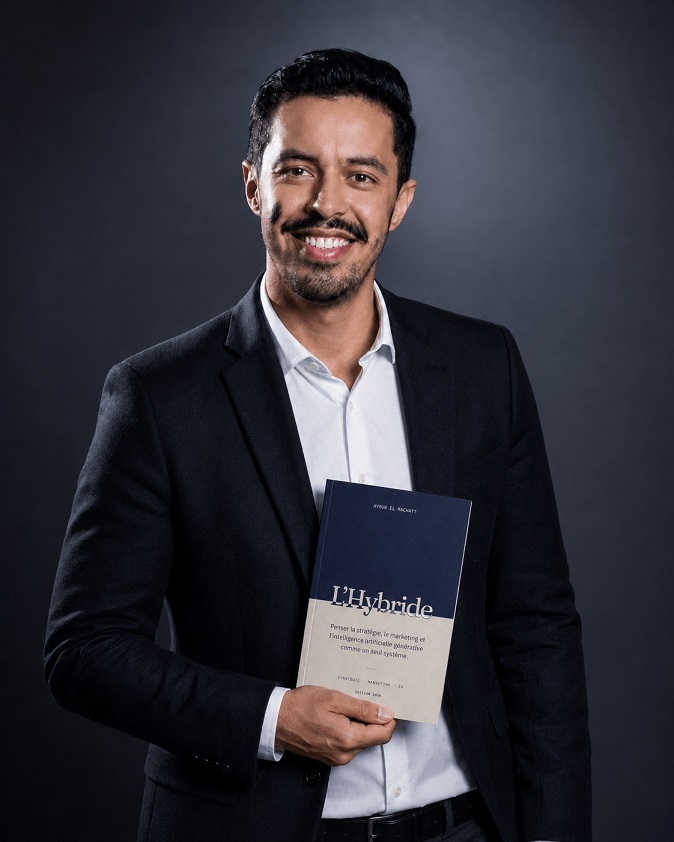
By Ayoub El Machatt
AI adoption in African companies requires greater than entry to software program. For firms whose staff already use generative AI, the following problem is to show particular person experimentation into dependable workflows, with clear accountability, applicable knowledge controls and measurable outcomes.
Once I meet a administration staff to debate synthetic intelligence, I not often start by asking which mannequin they use. I ask which AI instruments their staff are already utilizing.
The reply from administration is usually shorter than the reply from the folks doing the work. Advertising and marketing could also be drafting copy in ChatGPT. A salesman could also be summarising a young with Claude. Somebody in finance could also be testing a spreadsheet evaluation via a private account.
This can be a sample I encounter in my work with Moroccan firms: formal AI technique usually arrives after casual AI use. Administration then has to determine how these experiments ought to match into the organisation.
AI entry and organisational readiness are totally different challenges
Entry stays an necessary constraint. The World Financial institution’s Digital Progress and Traits Report 2025 identifies 4 foundations for AI: connectivity, computing capability, context within the type of knowledge, and competency via expertise. The African Union’s Continental Synthetic Intelligence Technique additionally emphasises infrastructure, expertise and accountable governance. [1] [2]
Coaching initiatives handle a part of that problem. In February 2025, CGEM, the European Financial institution for Reconstruction and Growth and LinkedIn introduced AI Technology, an initiative focusing on 1,000 Moroccan SMEs with entry to on-line studying. The announcement supplied licences legitimate till September 2025; it didn’t set up that 1,000 firms had accomplished an AI transformation. [3]
Inside an organization, additional choices stay. Can staff add a provider contract? Who evaluations an AI-generated gross sales proposal? What occurs when an automatic workflow produces an incorrect reply?
McKinsey’s 2026 international AI survey illustrates the excellence between particular person and organisational outcomes. Eighty % of respondents reported improved private productiveness, whereas 37% mentioned AI had contributed positively to their organisation’s earnings earlier than curiosity and taxes, or EBIT. These are totally different measures, relatively than a calculation of AI venture failure. [4]
The survey is international, not an estimate of African adoption. Its relevance right here is the administration query it raises: how do particular person beneficial properties grow to be repeatable enterprise outcomes?
Make casual AI use seen
Shadow AI is using AI instruments at work with out organisational approval or oversight. In coaching periods, I typically discover that consciousness of worker utilization is far more developed than the principles governing it.
I don’t interpret this primarily as worker misconduct. Persons are usually attempting to work quicker. Issues come up when the organisation can’t see which accounts are getting used, what data is being uploaded or which outputs are trusted.
ISACA’s 2026 AI Pulse Ballot, drawing on greater than 3,400 digital belief professionals worldwide, highlights gaps in governance, coaching and threat administration alongside widespread AI use. Once more, that is worldwide proof, relatively than a consultant survey of African SMEs. [5]
For an SME, I’d start by asking staff what they already use. Administration can then set up a brief checklist of authorized instruments, outline data that should not enter unapproved techniques, and specify which outputs require human assessment.
A sensible coverage ought to reply every day questions. “Use AI responsibly” doesn’t inform an worker whether or not a shopper doc could be uploaded or who should test a proposed response.
A Moroccan gross sales workflow: use AI the place it provides worth
One anonymised instance from my work concerned a gross sales staff in Morocco and an preliminary pool of round 1,000 prospect profiles.
Making use of enrichment and deeper AI evaluation to each profile would have requested pricey levels of the method to deal with prospects that less complicated guidelines may exclude. We as a substitute organised qualification as a sequence:
- Begin with roughly 1,000 profiles.
- Use fundamental filtering to retain round 150–200.
- Choose roughly 50 for extra knowledge enrichment.
- Apply deeper AI evaluation to roughly 20.
- Retain human accountability for remaining verification and qualification.
About 5% of the preliminary pool required enrichment, and round 2% required deeper AI evaluation. These are approximate processing proportions, not measured price financial savings or proof of improved gross sales conversion.
The administration change was deciding which steps may use easy guidelines, the place AI added worth and the place an individual nonetheless needed to validate the consequence. The workflow grew to become extra selective and simpler to manage.
Design coaching across the work
In one other Moroccan organisation, I used to be requested to assist AI adoption throughout technical and industrial groups. Their recurring duties, paperwork and potential use circumstances differed considerably.
A generic AI coaching programme would have missed these variations. Throughout preparation, we mapped workflows, ache factors, paperwork, current instruments and present AI practices by operate. The intervention was then structured round these conditions.
The speedy consequence was a shift from common AI consciousness in the direction of function-specific use circumstances and working questions. No monetary return had been rigorously measured at that stage, so I’d not connect an ROI determine to the instance.
Each circumstances replicate a broader lesson from my work: helpful AI adoption begins with understanding the method folks want to enhance.
Give every AI workflow a named proprietor
A small firm doesn’t essentially want an AI committee. It does want clear determination rights. I distinguish three obligations:
- Sponsor: approves the precedence, price range and time.
- Operational proprietor: understands the workflow and manages its day-to-day implementation.
- Reviewer: checks delicate outputs and controls what could be shared, printed or acted upon.
One individual could maintain a couple of function. The obligations ought to nonetheless be specific.
Evaluation ought to match the sensitivity of the duty. Inside brainstorming might have mild checking. Public advertising and marketing content material requires editorial validation. Work involving shopper knowledge, contractual commitments, monetary choices or well being data requires stricter approval and traceability.
Workers ought to know what data can be utilized, which software can course of it, who checks the consequence and which actions at all times require a human determination.
Measure outcomes in opposition to the complete price
Licences, prompts and workshop attendance measure exercise. They don’t set up financial worth.
Earlier than introducing AI right into a workflow, report a baseline. For instance, a proposal-writing staff may measure preparation time, correction time and acceptance charges. Buyer-service groups may evaluate response occasions, errors and buyer satisfaction.
Prices ought to embody subscriptions, API utilization, integration, coaching, human assessment and corrections. As an illustration, saving 5 hours of drafting whereas including 4 hours of checking leaves a a lot smaller time profit than the preliminary demonstration suggests.
The gross sales instance additionally reveals why processing fewer profiles will not be sufficient to show success. The enterprise nonetheless wants to ascertain whether or not the choice produces helpful prospects at an appropriate complete price.
I like to recommend agreeing on a cease situation earlier than a pilot begins: what proof would justify persevering with, altering or ending it?
Construct functionality one workflow at a time
A distributor in Casablanca, a financial institution in Nairobi and a health-tech firm working throughout a number of African markets may have totally different necessities. Their governance ought to replicate their actions, assets and dangers.
For a enterprise starting this transition, my strategy is to pick one helpful workflow, doc the way it at the moment operates, assign accountability, introduce applicable controls, practice the folks concerned and evaluate outcomes with the baseline.
That have can inform the following deployment. A rising assortment of instruments is much less helpful if no person is aware of which processes improved or who’s accountable when one thing goes fallacious.
Within the firms I work with, I’d spend much less time counting AI instruments and extra time inspecting modified workflows, knowledge use, human assessment and measured outcomes. That’s how particular person experimentation turns into an organisational functionality.
In regards to the writer
Ayoub El Machatt leads Wave Digital Company, working with organisations on digital advertising and marketing, acquisition and the sensible integration of AI. He’s the writer of L’Hybride, a ebook inspecting technique, advertising and marketing and generative AI. His contribution attracts on his skilled expertise with administration groups in Morocco.
Editorial word: The anonymised examples and approximate workflow figures have been equipped by the writer and haven’t been independently audited. The writer disclosed utilizing generative AI instruments to help analysis and confirmed accountability for supply verification, evaluation and conclusions.
Sources and additional studying
- World Financial institution. Digital Progress and Traits Report 2025: Strengthening AI Foundations.
- African Union. Continental Synthetic Intelligence Technique, 2024.
- CGEM. Launch of “AI Technology: Boosting 1000 Moroccan SMEs”, February 2025.
- McKinsey & Firm. The state of AI in 2026: On the highway to ROI, 25 August 2026.
- ISACA. 2026 AI Pulse Ballot.

