

COP17 | IUCN welcomes COP17 biodiversity commitments however warns funding gaps threaten 2030 targets
2026 UN Biodiversity Convention venue in Yerevan, Armenia. PHOTO/IUCN.
By PATRICK MAYOYO
The Worldwide Union for Conservation of Nature (IUCN) has welcomed a sequence of landmark selections aimed toward accelerating international efforts to halt biodiversity loss, following the conclusion of the 2026 United Nations Biodiversity Convention (COP17) in Yerevan, Armenia, whereas warning that inadequate funding and sluggish implementation proceed to threaten the achievement of worldwide conservation targets by 2030.
The 2-week convention, which concluded on 31 October, delivered necessary progress in direction of implementing the Kunming-Montreal International Biodiversity Framework (KMGBF), together with stronger recognition of the contributions of Indigenous Peoples and native communities, native and regional governments, girls, younger folks, companies and different non-state actors.
IUCN welcomed the strengthened recognition of Indigenous Peoples and native communities, sub-national governments, girls, younger folks, companies and different non-state actors in biodiversity governance. Nonetheless, the organisation cautioned that COP17’s outcomes didn’t totally match the ambition and monetary assets required to deal with the worldwide biodiversity disaster.
With solely 4 years remaining till 2030, IUCN careworn that international locations should translate political commitments into sensible conservation motion, supported by enough funding, stronger partnerships and efficient monitoring techniques.
The organisation additionally counseled Armenia’s COP17 Presidency for its management in steering complicated negotiations in direction of a conclusion.
A significant final result of COP17 was the primary worldwide evaluation of collective progress in direction of the objectives and targets of the Kunming-Montreal International Biodiversity Framework, adopted at CBD COP15 in Montreal, Canada, in December 2022.
The framework gives a world roadmap for halting and reversing biodiversity loss by 2030, with a longer-term imaginative and prescient of residing in concord with nature by 2050.
It accommodates 23 targets, together with the dedication to preserve at the least 30 per cent of the world’s terrestrial, inland water, coastal and marine areas by 2030, broadly often known as the 30×30 goal.
Different priorities embody restoring degraded ecosystems, lowering air pollution, tackling invasive alien species and addressing unsustainable consumption and manufacturing.
The worldwide overview uncovered important gaps between worldwide commitments and precise implementation, highlighting the necessity for pressing motion, significantly in areas the place progress has been weakest.
IUCN welcomed the adoption of the Yerevan pathway for accelerating implementation, alongside selections advancing marine biodiversity conservation and reviewing the programme of labor on inland waters biodiversity.
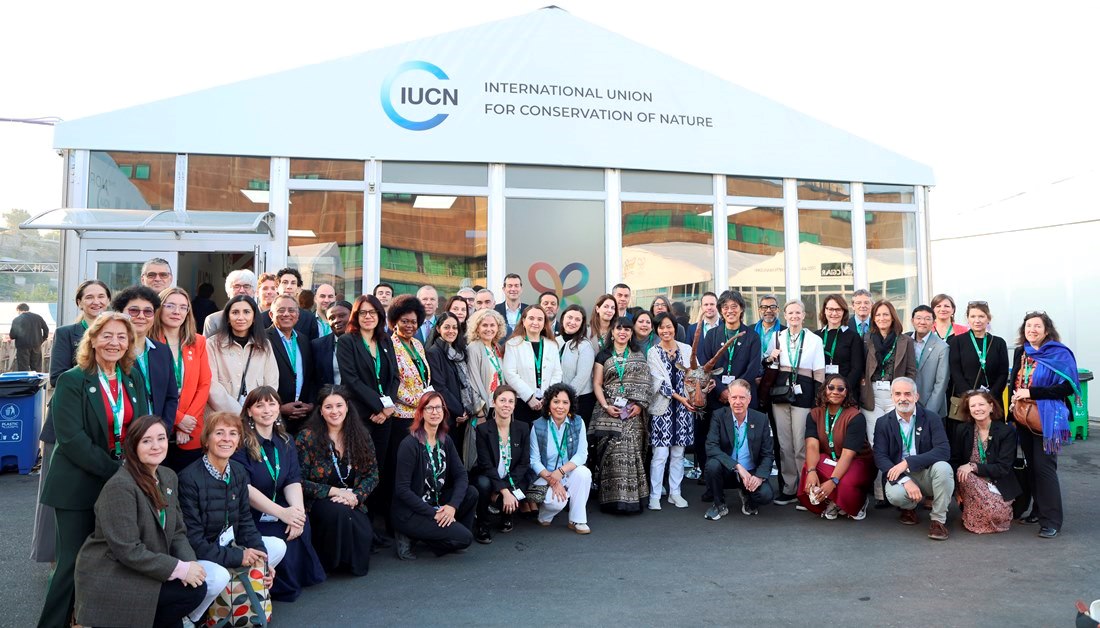
IUCN delegation at COP17. PHOTO/IUCN.
These selections are supposed to strengthen efforts in ecosystems the place implementation challenges stay important.
Regardless of progress on conservation commitments, financing stays one of many greatest obstacles to implementing the worldwide biodiversity framework.
IUCN welcomed the adoption of standards for everlasting preparations for the Conference’s monetary mechanism, alongside progress on digital sequence data (DSI) and the Cali Fund.
The convention established an open-ended advert hoc working group to advance the operationalisation of the Cali Fund forward of COP18 in 2028.
The fund is designed to make sure that advantages arising from the business and different makes use of of digital sequence data on genetic assets are shared pretty and equitably, together with with Indigenous Peoples and native communities.
COP17 made progress on contribution charges, certificates and funding allocation mechanisms, though additional negotiations will likely be mandatory.
The broader financing problem stays substantial. The KMGBF requires at the least US$200 billion yearly to be mobilised from all sources for biodiversity by 2030, together with elevated worldwide monetary help for creating international locations.
Germany, Spain and the UK made new pledges via the International Atmosphere Facility and the International Biodiversity Framework Fund. The Netherlands additionally introduced an analogous funding within the Tropical Forest Eternally Facility.
IUCN emphasised that these commitments should translate into sustained monetary flows and sensible investments, significantly in international locations with important biodiversity assets however restricted conservation funding.
One other necessary COP17 final result was the strengthened recognition of Indigenous Peoples and native communities as important companions in biodiversity conservation.
These communities play a big position in defending forests, wetlands, grasslands and different ecosystems via conventional data, customary governance and sustainable pure useful resource administration.
IUCN famous that their contributions weren’t totally mirrored within the first international progress report due to its reliance on nationwide reporting.
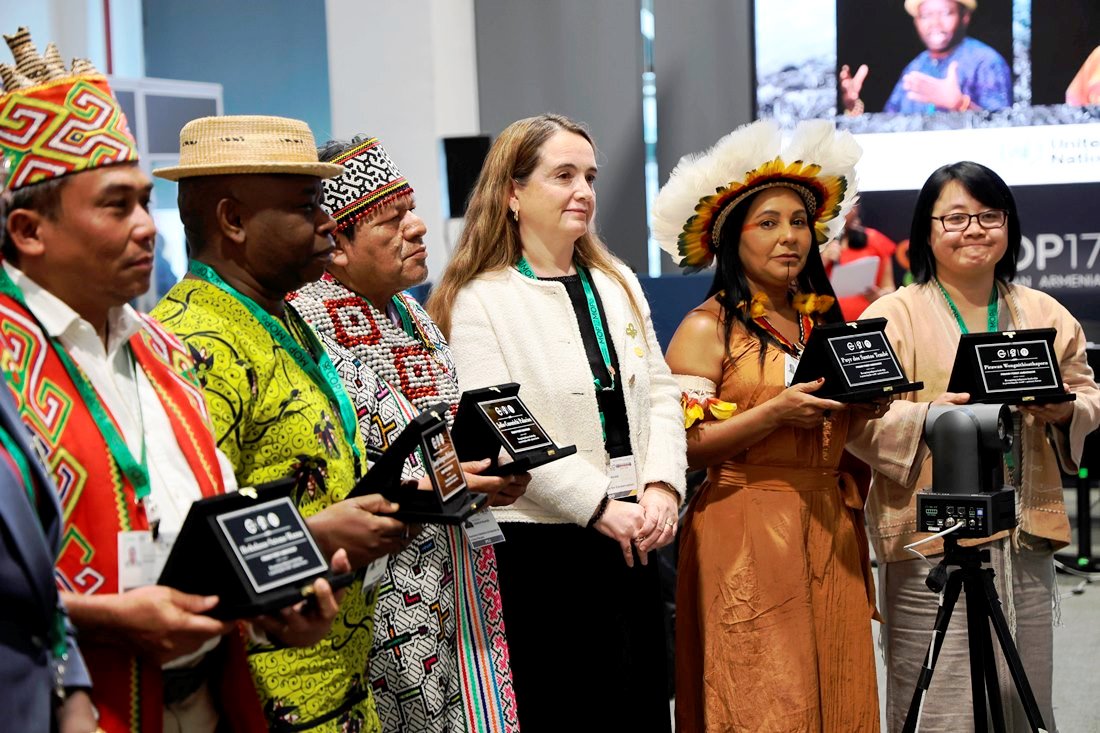
Indigenous main forest ambassador awards recipients. PHOTO/IUCN.
The organisation subsequently welcomed the adoption of the modus operandi for the Subsidiary Physique on Article 8(j), which gives a framework for strengthening the total and efficient participation of Indigenous Peoples and native communities in biodiversity governance.
COP17 additionally recognised Indigenous and Conventional Territories as necessary contributors to biodiversity conservation.
This might strengthen recognition and help for community-managed territories and their contribution to the 30×30 conservation goal.
In the meantime, cities, areas and different sub-national governments demonstrated rising management in international biodiversity motion, highlighting the significance of local-level implementation in attaining worldwide conservation commitments.
Regardless of the progress, IUCN expressed disappointment that COP17 didn’t formally welcome the entry into drive of the Settlement on the Conservation and Sustainable Use of Marine Organic Variety of Areas Past Nationwide Jurisdiction, generally often known as the BBNJ Settlement or Excessive Seas Treaty.
The settlement establishes a world framework for safeguarding marine biodiversity in areas past nationwide jurisdiction, together with via marine protected areas, environmental impression assessments and cooperation on marine genetic assets.
IUCN careworn that cooperation between the Conference on Organic Variety and the BBNJ Settlement is important to attaining international ocean conservation targets.
The worldwide group is making ready for the primary BBNJ Convention of the Events, scheduled for January 2027.
The organisation additionally regretted the removing of references to advisory opinions issued by the Worldwide Tribunal for the Regulation of the Sea and the Worldwide Court docket of Justice regarding states’ obligations in respect of local weather change.
The issues spotlight the significance of addressing biodiversity loss and local weather change via coordinated worldwide motion, given their interconnected impacts on ecosystems, species and pure assets.
IUCN additionally highlighted two flagship initiatives launched beneath Armenia’s COP17 Presidency: the Yerevan International OECM Motion Hub and the Yerevan Tech for Biodiversity Monitoring Hub.
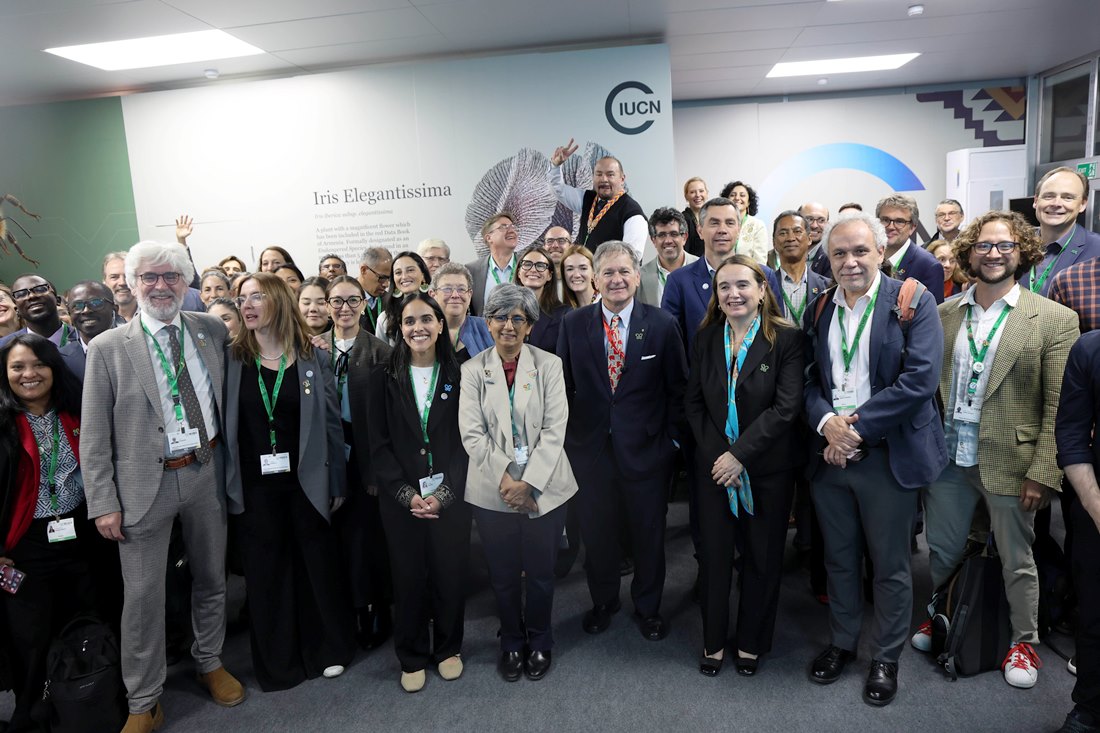
IUCN World Protected and Conserved Areas congress reception group photograph. PHOTO/IUCN.
Developed with the Meals and Agriculture Group of the United Nations (FAO) and the CBD Secretariat, the initiatives purpose to speed up and measure progress in direction of international biodiversity targets.
The OECM Motion Hub focuses on different efficient area-based conservation measures, which recognise areas exterior formally designated protected areas that ship efficient and sustained biodiversity conservation.
These embody qualifying community-managed territories and sustainably managed landscapes, increasing alternatives to realize the 30×30 goal.
The biodiversity monitoring initiative seeks to strengthen the usage of know-how and innovation in monitoring conservation progress, bettering entry to dependable information and supporting evidence-based decision-making.
Following the conclusion of COP17, consideration is shifting in direction of the implementation of its selections and preparations for future worldwide conservation conferences.
COP18 will happen in Quito, Ecuador, in 2028, offering one other alternative to evaluate progress and advance excellent points, together with biodiversity financing and the operationalisation of the Cali Fund.
In 2027, IUCN can even convene the World Protected and Conserved Areas Congress in Panama Metropolis, Panama, in September. The sixth Worldwide Marine Protected Areas Congress will present one other necessary platform for advancing international ocean conservation.
IUCN reiterated its dedication to working with governments and companions to deal with implementation gaps, strengthen capacity-building and enhance biodiversity monitoring.
The organisation mentioned COP17 had established a stronger basis for efficient, equitable and participatory biodiversity motion however acknowledged that important challenges stay.
Because the 2030 deadline approaches, the success of the Kunming-Montreal International Biodiversity Framework will depend upon whether or not governments can mobilise adequate assets, strengthen partnerships and switch worldwide commitments into measurable conservation outcomes.
The central message from Yerevan is that the world has a world framework for safeguarding nature, however pressing and adequately funded motion is required to make sure its ambitions change into actuality.

