

Classes from US mid-term: Will Gen Z lastly break Kanu’s 100-year political curse in 2027?
Kenya’s second President, Daniel arap Moi, promised that Kanu, would govern the nation for 100 years.
By PATRICK MAYOYO
When Kenya’s second President, Daniel arap Moi, retired from politics forward of the 2002 Common Election, he reportedly predicted that the independence ruling social gathering, Kanu, would govern the nation for 100 years.
Greater than twenty years later, though Kanu has misplaced its formal grip on the presidency, the political networks, personalities and energy constructions related to its 39-year rule stay firmly embedded in Kenya’s political institution.
Because the nation approaches the 2027 Common Election, a elementary query arises: will Era Z and the millennials lastly dismantle this enduring political order, or will they as soon as once more discover themselves voting for a brand new administration dominated by acquainted faces from the Kanu period? The reply might decide the course the political future the nation will take.
The defeat of Kanu in 2002 was extensively celebrated as a historic democratic breakthrough. Mwai Kibaki, the Nationwide Rainbow Coalition (NARC) presidential candidate, ended Moi’s 24-year presidency and Kanu’s uninterrupted maintain on govt energy since independence.
Nevertheless, the political transition didn’t essentially translate into the dismantling of the previous institution. Kibaki himself was a former Kanu secretary-general and Cupboard minister each in the course of the regime of independence President Jomo Kenyatta and below Moi.
The sample continued in 2013 when Uhuru Kenyatta, one other distinguished determine within the Moi administration and son of Kenyatta, ascended to energy on a Jubilee coalition ticket. His administration introduced collectively a number of politicians whose political careers had been formed throughout the Kanu institution together with William Ruto, who was his deputy and as soon as the Kanu Secretary Common when Uhuru was the Kanu chairman.
In 2022, Ruto succeeded Uhuru. Ruto had beforehand served as Kanu’s Secretary Common and was a Cupboard Minister throughout Moi’s presidency.
Consequently, whereas Kenya has skilled modifications of political events and presidential administrations, the circulation of political energy amongst people linked to the independence-era institution has remained remarkably persistent.
This isn’t to counsel that these administrations have been equivalent or that their political programmes have been indistinguishable. Reasonably, it highlights the exceptional skill of established political networks to re-invent themselves, negotiate new alliances and stay influential throughout successive administrations.
The rising presidential contest means that this sample might proceed. President Ruto represents one strand of the previous political institution. Kalonzo Musyoka, the Wiper Patriotic Entrance chief and a former Kanu Nationwide Organizing Secretary and Cupboard minister, represents one other.
Former Deputy President Rigathi Gachagua, though not a proper Kanu official, constructed his profession throughout the provincial administration system that operated below Moi. He subsequently served as Uhuru’s private assistant earlier than rising to nationwide prominence.
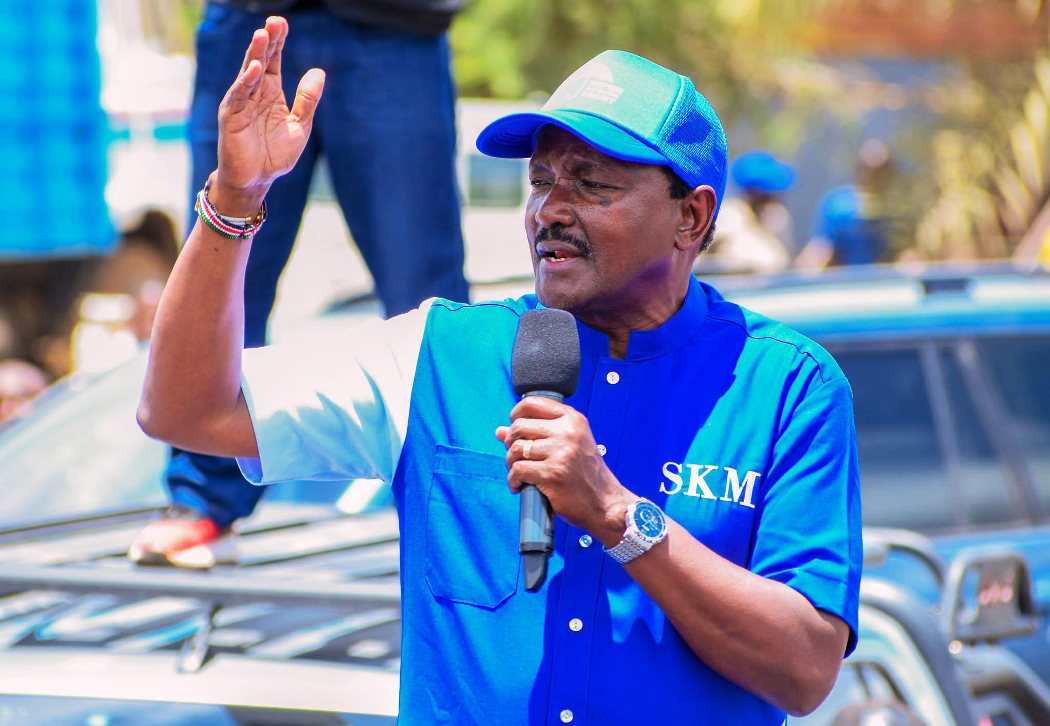
Kalonzo Musyoka was as soon as the Kanu Nationwide Organising Secretary. PHOTO/FILE
Former Inside Cupboard Secretary Fred Matiang’i, a presidential aspirant related to the Jubilee Social gathering, additionally emerged from a political setting carefully linked to the Kanu institution.
His earlier affiliation with former Cupboard minister Simeon Nyachae and subsequent service within the Uhuru-Ruto administration illustrate how deeply interconnected Kenya’s political elite stays.
Different influential figures, together with Prime Cupboard Secretary Musalia Mudavadi and Nationwide Meeting Speaker Moses Wetang’ula, additional display the enduring presence of politicians whose formative political careers have been formed in the course of the Kanu years.
The essential difficulty, due to this fact, just isn’t merely whether or not Kanu will return to State Home. It’s whether or not Kenya can transfer past a political system during which the identical networks repeatedly dominate presidential succession, whatever the events below whose banners they compete.
That is the place Era Z and the millennials might essentially change the equation. The 2024 Gen Z-led protests in opposition to the Finance Invoice marked a big departure from Kenya’s conventional political mobilisation.
Younger individuals mobilised largely by digital platforms, challenged the federal government’s fiscal insurance policies and demonstrated an unprecedented willingness to confront political authority with out relying totally on established political events or opposition leaders.
The protests uncovered a technology more and more unwilling to just accept inherited political loyalties, ethnic mobilisation and traditional patronage politics because the defining options of democratic participation.
Extra importantly, they demonstrated that political consciousness amongst younger Kenyans is more and more organised round accountability, financial alternative, taxation, corruption, public companies and constitutional governance.
The problem for the political institution is that these grievances can’t simply be addressed by the standard politics of ethnic arithmetic and elite power-sharing. The current United States mid-term electoral outcomes cited on this debate supply an fascinating illustration of how generational voting patterns can affect political outcomes.
In accordance with Related Press (AP) Voter Ballot/SSRS information, 71 p.c of US voters aged between 18–29 voted for Democrats whereas 25 p.c voted for Republicans.
Democratic candidates made up vital floor amongst key demographic teams in the 2026 midterms, based on The AP Voter Ballot, reversing most of the beneficial properties President Donald Trump made with the standard Democratic coalition within the 2024 presidential election.
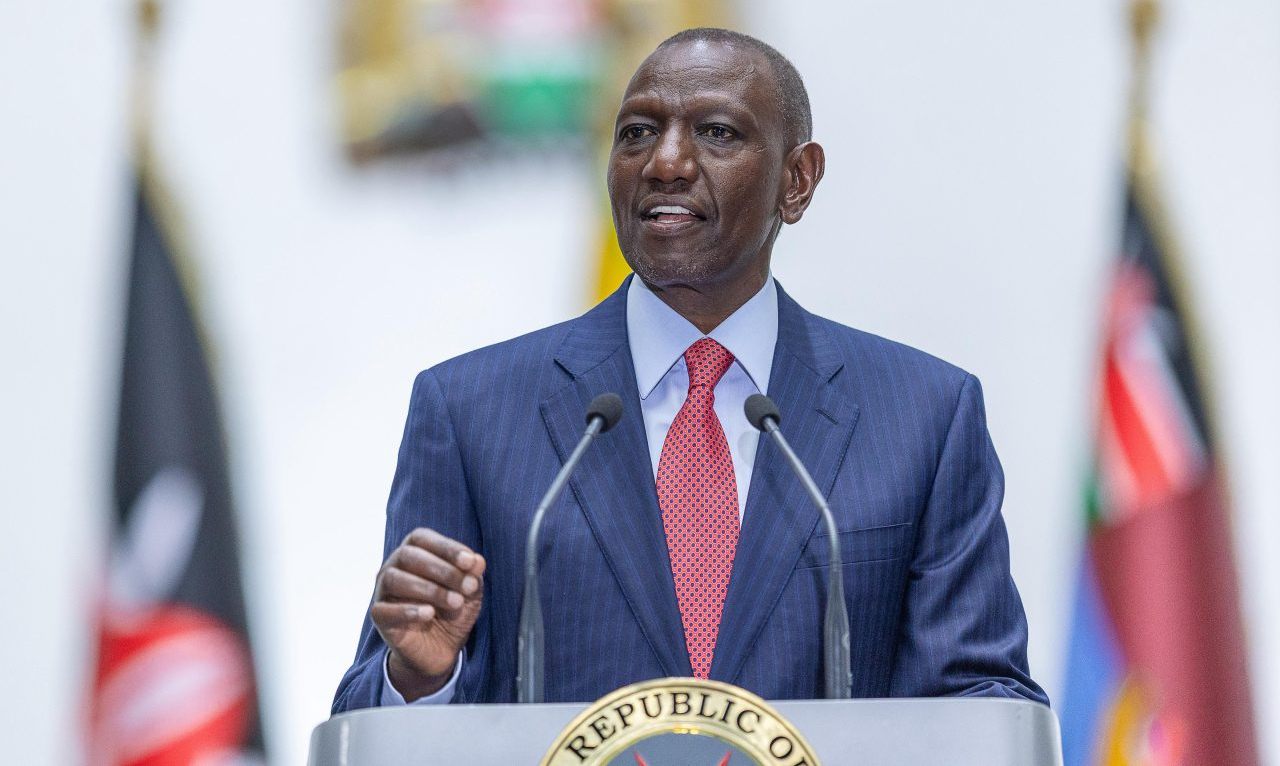
President Ruto was once the Kanu Secretary Common. PHOTO/FILE.
The AP Voter Ballot, a sweeping survey of greater than 100,000 voters in all 50 states, confirmed that younger voters swung sharply left.
Though American political dynamics can’t be instantly transplanted into Kenya, the broader lesson is essential: youthful voters can turn into a decisive electoral constituency when their political preferences converge round shared financial and social considerations.
Kenya’s millennials and Gen Z might equally reshape the 2027 electoral panorama. Collectively, they symbolize a considerable part of the citizens, though their affect will finally rely on voter registration, turnout and geographical distribution.
Their problem will probably be to transform the vitality witnessed in the course of the 2024 protests into sustained political organisation and electoral participation. In opposition to this backdrop, politicians with out direct hyperlinks to the previous Kanu institution might entice appreciable consideration.
Nairobi Senator Edwin Sifuna, related to the Linda Mwananchi political motion, represents a possible bridge between youthful voters and established democratic politics. His political attraction might relaxation on his skill to articulate calls for for accountability, institutional reform and generational renewal.
Martha Karua, chief of the Folks’s Liberation Social gathering, additionally represents another political custom, having constructed a lot of her political identification round constitutionalism, democratic reform and opposition to authoritarian governance.
Then there may be Ndindi Nyoro, the Kiharu MP and chief of the Folks’s Social gathering of Kenya (PPK), who has emerged as one other distinguished determine within the unfolding debate on generational and political change. An economist by coaching, with a level from Kenyatta College, Nyoro has constructed his political profile round financial discourse, public finance and constituency growth.
To this point Gen Z have emerged to be related to the Linda Mwananchi Motion whose presidential candidate is anticipated to be Sifuna. Nevertheless, Gen Zs assist should be earned by credible insurance policies, political integrity and a willingness to embrace a genuinely completely different method to governance.
The most important impediment to breaking the Kanu-era political order just isn’t essentially the absence of different leaders. It’s the division inside opposition politics, the persistence of ethnic voting blocs, the affect of political financing and the power of established politicians to soak up rising actions into acquainted coalitions.
Younger Kenyans might reject the previous political institution, however rejecting it’s not the identical as organising a viable electoral various. Moreover, millennials and Gen Z usually are not politically homogeneous. They differ in financial circumstances, regional pursuits, political priorities and ideological preferences. Their demographic weight alone can’t assure a political revolution.
For the 2027 election to turn into a real generational watershed, younger voters should transfer past on-line activism and take part in voter registration, civic training, candidate scrutiny and the poll.
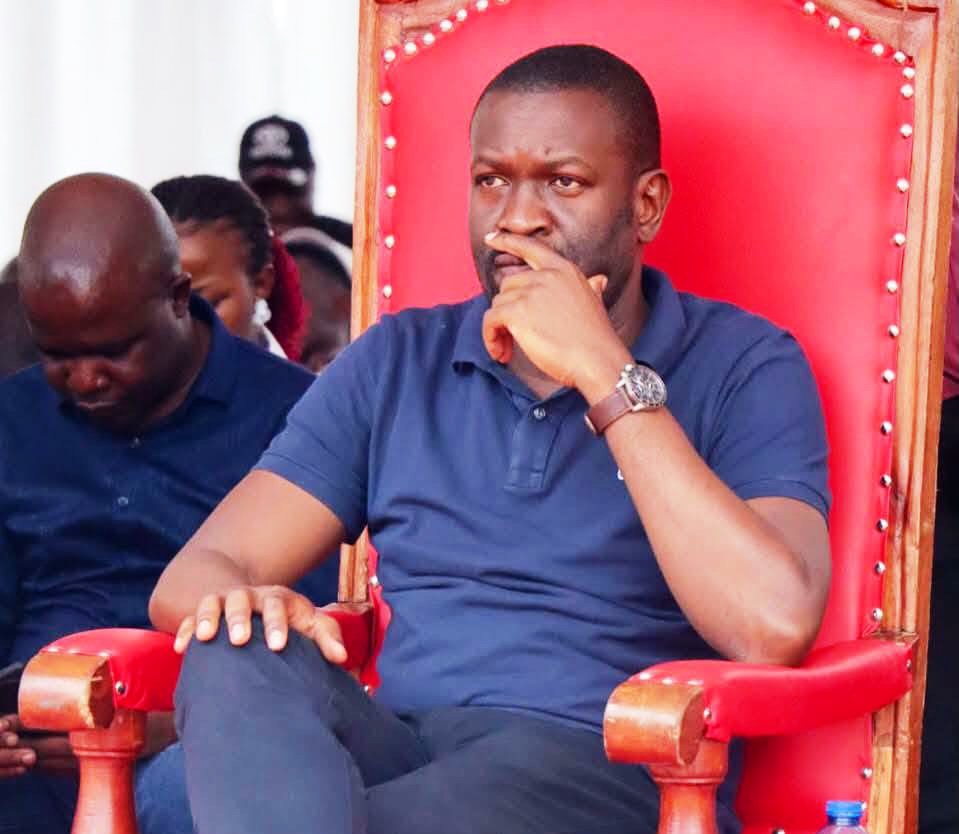
Nairobi Senator and Linda Mwananchi Motion presidential aspirant is rising as darling of youthful voters. PHOTO/FILE.
Equally essential, rising political leaders should display that generational change means greater than changing older politicians with youthful faces. It should contain a elementary shift in how energy is exercised, public assets are managed and residents take part in governance.
It needs to be famous that generational change just isn’t merely about changing older politicians with youthful faces or transferring political energy from one age group to a different. Reasonably, it represents a elementary shift in political management, concepts, values, priorities and the train of public authority.
It entails shifting away from the politics of character cults, ethnic mobilisation, patronage and inherited political networks in the direction of a brand new political tradition anchored in accountability, integrity, transparency, constitutionalism, financial alternative and citizen participation.
In Kenya’s context, generational change ought to imply dismantling entrenched political pursuits and creating area for recent management, revolutionary concepts and governance approaches that reply to the aspirations of a altering inhabitants.
Finally, it’s not the age of these in search of energy that issues most, however whether or not they symbolize a real departure from the political practices which have outlined the nation since independence.
Moi’s prediction that Kanu would rule Kenya for a century might but show politically symbolic reasonably than actually correct. The social gathering misplaced State Home in 2002, however the networks that sustained its dominance have demonstrated extraordinary resilience. The 2027 Common Election might current the strongest alternative but to problem that legacy.
Gen Z has already demonstrated its capability to disrupt Kenya’s political institution. The millennials carry further electoral weight and a technology’s value of expertise navigating the nation’s altering political and financial panorama.
However the decisive query is whether or not these two generations can unite round a standard political imaginative and prescient reasonably than turn into devices within the acquainted succession battles of established politicians. In the event that they succeed, 2027 might mark the start of a genuinely new political order.
In the event that they fail, Kenya might as soon as once more witness a change of political management and not using a significant change within the individuals and networks controlling the levers of energy.
The true battle in 2027 might due to this fact not be between Ruto, Sifuna, Kalonzo, Gachagua or some other presidential aspirant. It could be between an entrenched political institution in search of to protect its affect and a brand new technology decided to redefine who governs Kenya and, extra importantly, how the nation is ruled.

