

UN biodiversity summit enters essential closing week amid funding disputes and requires pressing motion
From L-R: Kirsty Bryant, CBD Secretariat; and Co-Facilitators of a Buddies of the Co-Chairs group on DSI Katie Beckett, UK, and Henry Michael Ndengejeho, Namibia.PHOTO/IISD/ENB – Mike Muzurakis.
By PATRICK MAYOYO
The United Nations Biodiversity Convention has entered its decisive closing week, with governments going through mounting stress to bridge funding gaps, reform dangerous subsidies and strengthen accountability within the world battle towards biodiversity loss.
The seventeenth Convention of the Events to the Conference on Organic Range (COP 17) is anticipated to conclude on Friday, following a primary week that delivered a number of adopted choices and recent monetary pledges price a whole bunch of hundreds of thousands of {dollars}.
The second week, which features a high-level section, brings collectively roughly 1,500 contributors, together with 140 finance and setting ministers and deputy ministers, to handle obstacles to implementing the Kunming-Montreal International Biodiversity Framework adopted in 2022.
The summit additionally encompasses conferences beneath the Cartagena Protocol on Biosafety and the Nagoya Protocol on Entry and Profit-sharing.
COP 17 President Hambardzum Matevosyan mentioned the convention had mobilised greater than US$1.8 billion from governments, philanthropic organisations and buyers to help biodiversity motion.
“The primary week has proven that cooperation can ship progress. The second week should reveal that political dedication can ship motion,” he mentioned.
In the course of the opening week, delegates adopted 4 COP 17 choices overlaying invasive alien species, gender, schooling and data administration. An extra eight substantive choices superior implementation of the Cartagena Protocol, whereas two choices addressed monitoring, reporting and compliance beneath the Nagoya Protocol.
Consideration is now shifting to unresolved negotiations over worldwide biodiversity finance, the reform of environmentally dangerous incentives and the duties of companies benefiting from nature-related sources.
United Nations Atmosphere Programme govt director Inger Andersen mentioned the participation of finance ministers highlighted the necessity to combine biodiversity into financial planning and monetary choices.
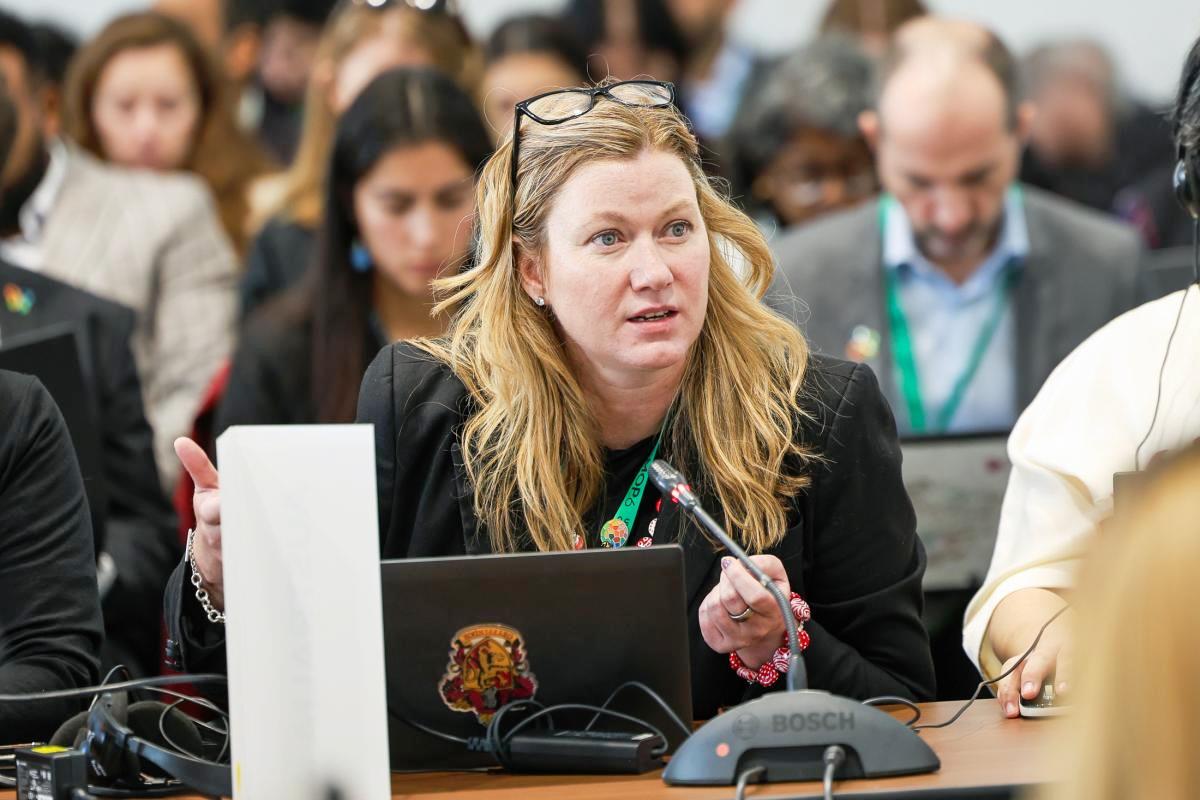
Melissa Cotterill, Australia. PHOTO/IISD/ENB – Mike Muzurakis.
“Nature will not be a luxurious we shield when economies can afford it. Nature is what makes economies potential,” she mentioned, warning that biodiversity loss was an financial problem in addition to an environmental one.
Astrid Schomaker, govt secretary of the Conference on Organic Range, mentioned governments should prioritise accountability, align monetary flows with conservation objectives and speed up implementation of the framework’s 23 targets for 2030.
She warned that monetary incentives continued to undermine conservation efforts, with considerably more cash supporting actions that injury nature than initiatives geared toward restoring it.
The Armenian presidency has launched the Yerevan Name on incentives optimistic to biodiversity and the Buddies of Goal 18 initiative. Each search to construct worldwide help for decreasing dangerous incentives by not less than US$500 billion yearly and growing optimistic incentives for biodiversity by 2030.
Monetary commitments have additionally gathered tempo. Following new pledges from Spain and Uzbekistan, the ninth replenishment of the International Atmosphere Facility reached US$4.4 billion.
Germany, Iceland, Monaco, the Canadian province of Québec and the town of Berlin introduced contributions exceeding US$60 million to the International Biodiversity Framework Fund, whereas Armenia confirmed its intention to contribute. Germany additionally introduced a US$300 million public-private finance bundle for the Legacy Landscapes Fund.
Regardless of these bulletins, main disagreements stay over how worldwide biodiversity funding ought to be structured, which international locations and different actors ought to contribute, and the way a lot cash ought to be mobilised.
Negotiations on the monetary mechanism established beneath Article 21 of the biodiversity conference failed to achieve consensus, forcing delegates to proceed discussions in a smaller group. Disputes over the contributor base are additionally anticipated to stay a central challenge.
One other contentious topic is the multilateral mechanism for sharing advantages arising from using digital sequence data (DSI), together with the Cali Fund.
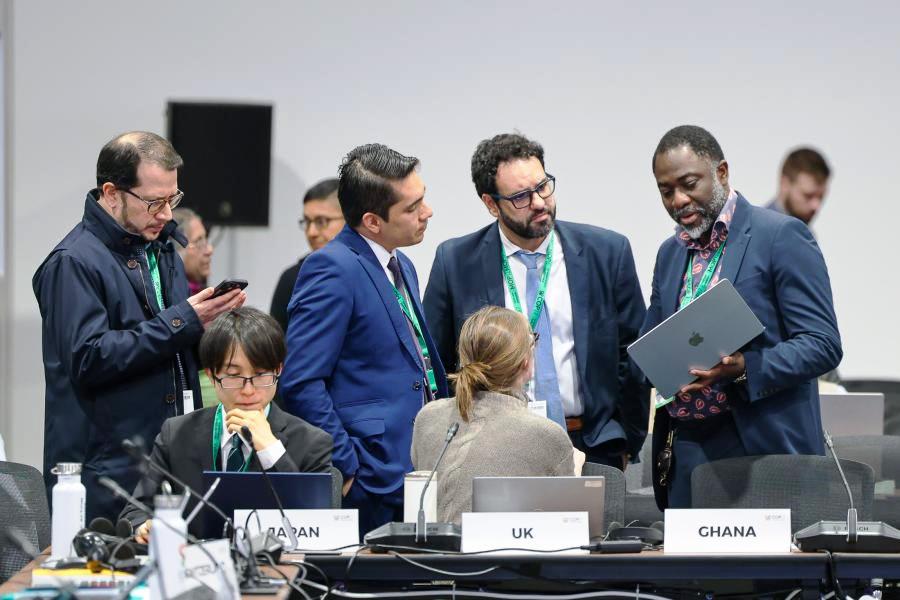
Within the negotiation rooms, intensive deliberations continued on useful resource mobilization and the Multilateral Mechanism on benefit-sharing. PHOTO/IISD/ENB – Mike Muzurakis.
Below indicative charges agreed in 2024, firms utilizing DSI are inspired to contribute 1 per cent of worldwide income or 0.1 per cent of income to help biodiversity conservation and sustainable use.
Nonetheless, the fund has obtained simply US$8,990 in deposits up to now, highlighting the hole between worldwide commitments and monetary supply.
An evaluation by Zero Carbon Analytics of the world’s 15 largest pharmaceutical firms estimated that their contributions would have totalled US$756 million for 2025 if calculated utilizing the indicative charges. The evaluation additionally discovered that the businesses’ income had been 213 occasions higher than that quantity, whereas shareholder funds exceeded the urged contribution by greater than 175 occasions.
Delegates stay divided over which companies ought to contribute and whether or not certificates recognising contributions to the Cali Fund ought to supply flexibility or be restricted to customers paying in step with the indicative charges.
Different excellent points embody establishing a everlasting physique for Indigenous Peoples and native communities beneath Article 8(j), and guaranteeing biodiversity measures are in keeping with local weather commitments and different worldwide obligations.
The summit’s closing days are anticipated to check whether or not governments can flip political guarantees and new funding bulletins into concrete measures to halt and reverse biodiversity loss.
With the primary world overview figuring out substantial gaps between nationwide commitments and implementation, negotiators face mounting stress to agree on sensible options earlier than the convention closes on Friday.

